
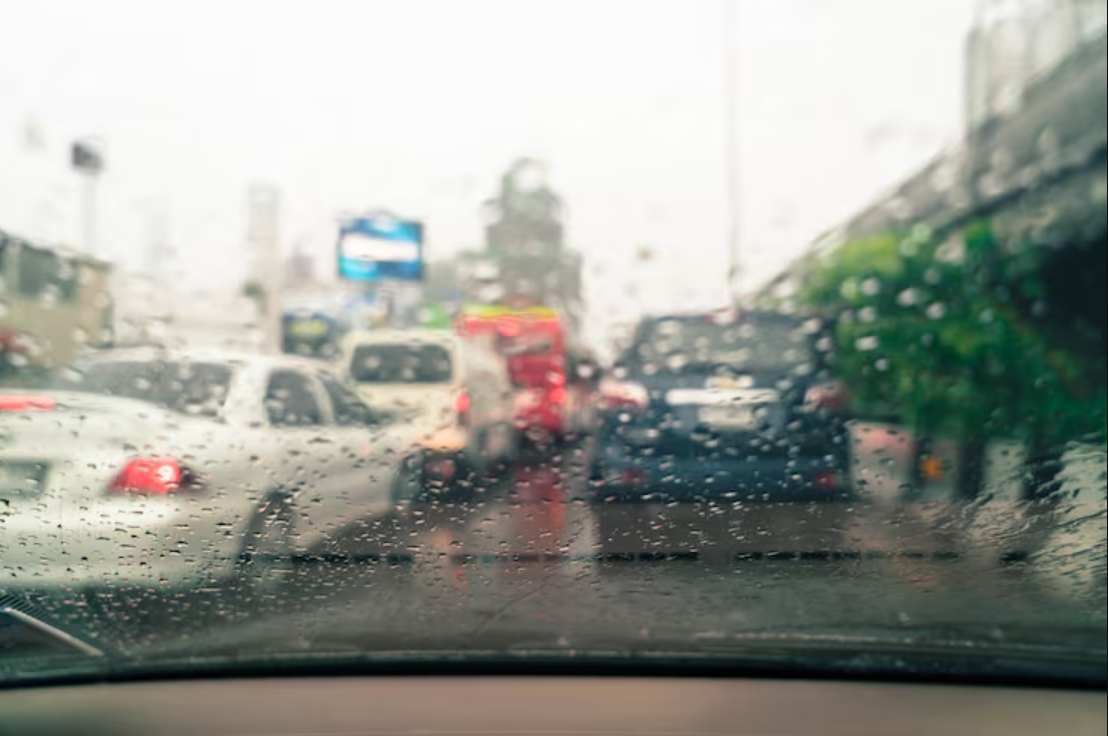
Rain can change road conditions within minutes, making even a familiar route more demanding. In Jamaica, where sudden and heavy rainfall can reduce visibility and leave water on the road, drivers need to adapt their habits to the weather. Good preparation, proper vehicle maintenance, lower speeds and greater awareness can make a significant difference when roads become wet.
1. Reduce Your Speed and Increase Your Following Distance
One of the simplest ways to improve driving safety in the rain is to slow down. Wet pavement reduces tire grip and can increase the distance required to stop, particularly when the rain is heavy or water has accumulated on the road. The Jamaica Constabulary Force recommends reducing speed during bad weather and leaving additional space between vehicles.
Instead of maintaining the same speed you would use on a dry road, adjust according to visibility, traffic and the amount of water on the pavement. Avoid sudden acceleration, hard braking and abrupt steering movements because these actions can make it more difficult to maintain control.
A greater following distance also gives you more time to react if the vehicle ahead brakes unexpectedly. During poor weather, creating additional space is particularly important because stopping distances can increase.
2. Check Your Tires Before the Rainy Season
Your tires are the only part of the vehicle that maintains direct contact with the road, so their condition is essential for wet road safety. Adequate tread depth allows water to escape through the grooves and helps maintain contact with the pavement.
Before driving in heavy rain, inspect the tires for uneven wear, cracks, damage or insufficient tread. Tire pressure should also be checked regularly and kept at the manufacturer's recommended level. Incorrect pressure can affect handling, braking and tire performance.
Drivers should also understand the danger of aquaplaning, which can occur when a layer of water prevents the tires from maintaining proper contact with the road. If this happens, avoid sudden braking or steering. Keep the steering wheel steady, ease off the accelerator and allow the tires to regain traction.
3. Make Visibility a Priority
Heavy rain can dramatically reduce visibility. Windshield wipers should clear water effectively without leaving large streaks, while the windshield washer system should have sufficient fluid.
The headlights, brake lights, indicators and other exterior lights should also be checked regularly. Proper lighting helps you see the road and makes your vehicle easier for other road users to identify.
If the windshield begins to fog, use the vehicle's ventilation or air-conditioning system to clear it. A clean windshield, functional wipers and properly working lights can make a major difference when visibility becomes limited.
4. Be Careful Around Standing Water
Large puddles and flooded sections of road can hide potholes, debris or damaged pavement. More importantly, it may be impossible to judge the depth of the water from inside the vehicle.
Avoid driving through flooded roads when the depth is unknown. Water can reach the engine, electrical components and other mechanical systems, potentially causing expensive damage. If a road is seriously flooded, finding another route or waiting for conditions to improve is safer than taking the risk.
This is especially relevant in Jamaica because intense rainfall can quickly change road conditions in low-lying areas and around drainage points.
5. Prepare the Vehicle Before You Need It
Safe rainy weather driving begins before the first drop falls. Regularly inspect the brakes, tires, windshield wipers, lights, battery, fluid levels and suspension. A vehicle that is properly maintained gives the driver a better chance of responding safely when conditions deteriorate.
It is also important to remain focused. Avoid using a mobile phone while driving and pay attention to pedestrians, motorcycles, cyclists and other vehicles. The Jamaica Constabulary Force specifically recommends defensive driving, reduced speeds during bad weather and maintaining extra space from the vehicle ahead.
For more automotive maintenance and driving information, you can also explore the latest articles on Jamaica Auto.
Rain does not necessarily mean that driving must stop, but it does require a different approach. Lower speed, good tires, clear visibility, functional brakes and greater following distance can all help reduce unnecessary risks. The next time dark clouds appear over Jamaica, ask yourself: Is my vehicle ready for the road, and am I prepared to adjust my driving to the conditions?